 Admin
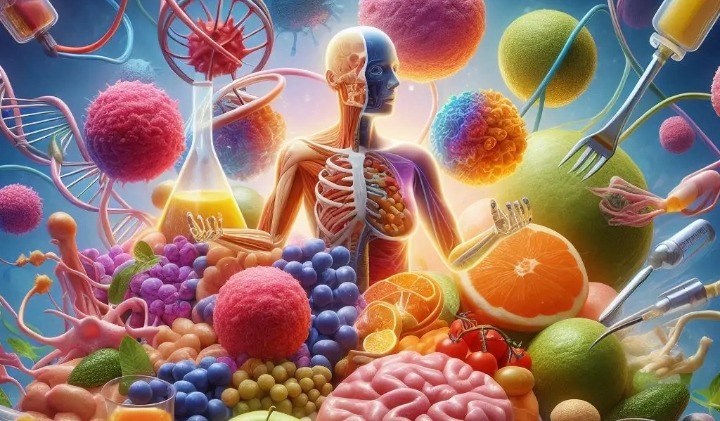
AdminWe will go over worst foods that feed cancer Cells. So about 40% of people will be diagnosed with cancer at some point in their lifetime. And so much of it is just bad genetics and bad luck.
But here’s the good news. Up to 40% of all cancers are preventable. So on one hand, you can’t change your genetics. But on the other hand, you can absolutely influence how your genes behave.
And one of the most powerful ways to influence your genes and lower your risk of cancer is through the food you eat every day.
Because many cancers are not just a metabolic disease and it’s an immune function disease. And the wrong foods, even the ones that we consider normal or healthy, they can quietly foster the exact conditions that cancer needs to grow and proliferate.
So in this guide, we will break down the science behind how certain foods feed cancer cells. And we are going to give you a simple framework to how to avoid them.
Foods that Feed Cancer Cells
How Cancer Starts
Cancer starts when a normal cell becomes abnormal. Just a single mutation, which happens all the time. And if this mutation goes unrepaired or unchecked, in some cases it can lead to uncontrolled growth of cells.
But for that mutated cell to survive and spread, it needs several things to fall into place.
So first, cancer cells need glucose as a primary energy source. And then it needs hormones to grow. So it would be things like insulin and IGF-1, which are basically signals that activate growth pathways.
And then cancer cells require inflammation, which is what breaks down barriers.
And that inflammation is what suppresses our immune system. And our immune system is our first line of defense against cancers.
And then finally, cancers need a blood supply, which they get through a process called angiogenesis. And that is what provides these cancer cells new blood vessels, almost like a lifeline, to feed the nutrients needed for growth.
Unfortunately, many foods in our modern diet directly support every one of those steps. But the good news is we can use this to our advantage.

Aflatoxins
And we can use our food to either feed cancers or we can fight it. So we have to start with one of the most potent, naturally occurring carcinogens ever known. And that is aflatoxins, which is a toxin produced by certain molds that we usually encounter on certain grains or nuts or corn.
The foods that we really want to be careful with are peanuts and tree nuts like almonds or walnuts or pistachios. Now, we do not want to avoid these foods. There’s nothing wrong with nuts, but we have to be careful to avoid buying these nuts or grains from humid and warm countries where they could be prone to mold contamination.
We also have to be careful with the indirect or downstream exposure that we can get from things like peanut butter or almond butter, where they could be produced from nuts that didn’t have as thorough of an inspection from mold.
So to minimize this carcinogen, you got to look for brands that don’t get their nuts from humid places. And if you eat nuts, then you need inspect them carefully and avoid eating the ones that are discolored or shriveled, as that could potentially point to a mold contamination.
You should also try to eat nuts within a month of purchasing them from the store and watch out for their shelf life expiration dates. And another thing that’s helpful is roasting peanuts and pistachios, which can reduce the amount of aflatoxin content, but it doesn’t eliminate it completely. And by the way, another sneaky way aflatoxins can make it into our food is indirectly through milk and dairy products.
So some animals consume aflatoxin-contained feed like corn, and there’s a special aflatoxin called M1, which lives on animal feed, and then it can get secreted in milk. So we have to be careful, especially if you get milks from cows that are fed untested grain, or if you get unregulated raw milk or dairy products.
Foods High in Sugar or Processed Carbohydrates
Foods that are high in sugar or processed carbohydrates are also linked to increased cancer risk, especially when it comes to breast cancer and colon cancer, and possibly pancreatic cancer. And that is because cancer cells love sugar.
So to help you visualize this, imagine your body’s made out of trillions of tiny engines, which are your cells. And normally, these engines burn fuel very efficiently. They use oxygen, and they get a lot of energy from each bite of food that you eat. But cancer cells, well, they’re different.
They’re more like broken engines that do not work efficiently, so they burn through a ton of fuel really fast. And their favorite fuel is sugar, or more precisely, it’s glucose, which is the type of sugar that your body makes from food like breads and pastas and candy and soda.
That is in part explained by the Warburg effect, which is a process called aerobic glycolysis, where cancer cells choose to burn sugar super quickly, even when there’s plenty of oxygen around.
And cancer does not care about efficiency. They just want to grow fast. So when you eat foods that spike your blood sugar, your body releases hormones like insulin and IGF-1, which is normally a good thing.
But if it’s done in excess, then these hormones actually send a message to the cells saying, hey, it’s time to grow bigger and divide. So now you get a double whammy.
You’re feeding your body of food that is preferred by cancer cells, and then the sugar you’re eating is increasing the signals in your body that tells cancer cells to grow and divide faster.
And we especially see this in breast cancer, where some studies show that cancer cells can have six times more insulin receptors than healthy cells.
If that wasn’t bad enough, that excess sugar leads to chronic inflammation, which can further lead to even more DNA damage, which then in turn makes it even easier for cancers to appear. And then this inflammation also weakens your immune system, which we often think about in terms of fighting infections.
But our immune system is actually our first line of defense against cancers. So bottom line is, cancer cells are very sugar hungry, which we can actually use to our advantage. We can choose the foods that will stop feeding cancer, and instead we can prioritize foods that feed the rest of our body while starving cancer cells.
So it’s best to limit sugar as much as you can, with the worst offenders being processed or high-glycemic carbohydrates. And instead, we need to emphasize low-glycemic carbohydrates that have high fiber, so things like beans and whole grains and vegetables and berries.
But if you drink regular soda, that’s just low-hanging fruit that can be switched today to things like tea or water or even diet soda.
There is a lot of controversy about diet drinks and sweeteners in general and their association with cancer. But that’s a very nuanced topic.
Processed Meat and Red Meat
Now, another food that we have to be careful with is processed meat and red meat.
But we have to approach this topic a little carefully because the science on this is not as black and white as the headlines make it seem.
So to start, there’s tons of studies and meta-analyses that showed an association between high intake of processed meat, like ham and bacon and sausages and hot dogs, or high intake of red meat, so things like pork or beef or lamb, and how they could be causing cancers, especially colorectal cancer.
But the important thing here is these are observational studies that show association, but we don’t know if there’s causation.
Because in a lot of these studies, research look at what people ate and track which groups of people develop cancer.
What they notice is the people who ate more processed meat or red meat were more likely to get cancers in the colon. But it’s hard to tease out if those people also smoked more or exercised less. Or on the flip side, did the people that ate less processed meats, were they more likely to have access to fresh food? Or did they have access to better health care? Which is what we call the healthy user bias that we often have to account for in these studies.
Where maybe it wasn’t the consumption of meat itself, but maybe it’s the other behaviors that could possibly explain the reduced cancer prevalence in those populations.
There is definitely mechanistic reasons for why red meat or processed meat may cause cancer. Because many processed meats have nitrites, which are preservatives used to cure and flavor meats. And once nitrites get into your stomach, the acidity in your stomach turns them into nitrosamines, specifically N-nitrosodimethylamines or NDMA, which is a known carcinogen.
It could increase the risk of cancer, specifically stomach cancer. On top of that, how we cook meats also matters. Because when meat is grilled or fried or barbecued at high temperatures, this process can create chemicals called heterocyclic amines or HCAs or polycyclic aromatic hydrocarbons or PAHs.
Both of these compounds have been shown to damage DNA and promote cancer cells in animal studies. So how do we put it all together? Well, the studies are all over the place, but the correlation between processed and red meat is definitely there.
But looking at the totality of evidence, which is not perfect, it is entirely convincing that it’s the red meat itself that causes cancer. But it’s probably the absence of food that the extra red meat replaces is what causes the problem.
So when you eat more red meat or processed meat, by default, you’re probably eating less of something else. And you’re probably eating less fiber-rich foods. So things like fruits and vegetables and beans and whole grains.
We have numerous studies and meta-analyses that show that people with a higher dietary fiber intake had a lower risk of several cancers and had a 13% reduction of cancer mortality.
You don’t need to give up red meat or grilled meat, but don’t overdo it. And definitely try to load up on fiber with every meal.
Alcohol
Next, there’s pretty strong scientific evidence that alcohol causes cancer. And the International Agency for Research on Cancer has classified alcohol as a group 1 carcinogen all the way back in 1987 due to sufficient evidence that it causes cancer of the oral cavity and the pharynx and the esophagus and your liver.
There’s also association with breast cancer in women and colorectal cancer. And alcohol can lead to cancer in several ways.
- It metabolizing your liver to acetaldehyde, which is a toxic compound that directly damages DNA. And then it interferes with DNA repair.
- Alcohol also causes vitamin deficiencies. So you get lower levels of vitamin B1 or thymine, which is absolutely critical for healthy mitochondrial function and energy metabolism.
- Alcohol can also impair your body’s ability to absorb folate.
- A folate deficiency can lead to further DNA synthesis errors.
- Alcohol also acts as a solvent, which actually enhances the absorption of other carcinogens like tobacco or NDMA into your tissues.
Conclusion
So this is not a comprehensive list of all the foods that cause cancer. 40% of all cancers are preventable and you can stack the odds in your favor by avoiding foods that fuel cancer cells to grow. You can’t choose your genetics, but you can absolutely influence how your genes behave.
In this article, we go over the worst foods that are fueling cancer and how to navigate your nutrition to lower your risk of cancer.


 Admin
Admin